AI analysis · Up to 3 properties · Shareable link
AI compares your shortlist. You make the call.
Three properties, seven dimensions, hundreds of measurements. The AI does the reading — commutes, school zones, amenities, risk — then writes you a plain-English comparison naming the winner in each category and exactly what you trade away to get it.
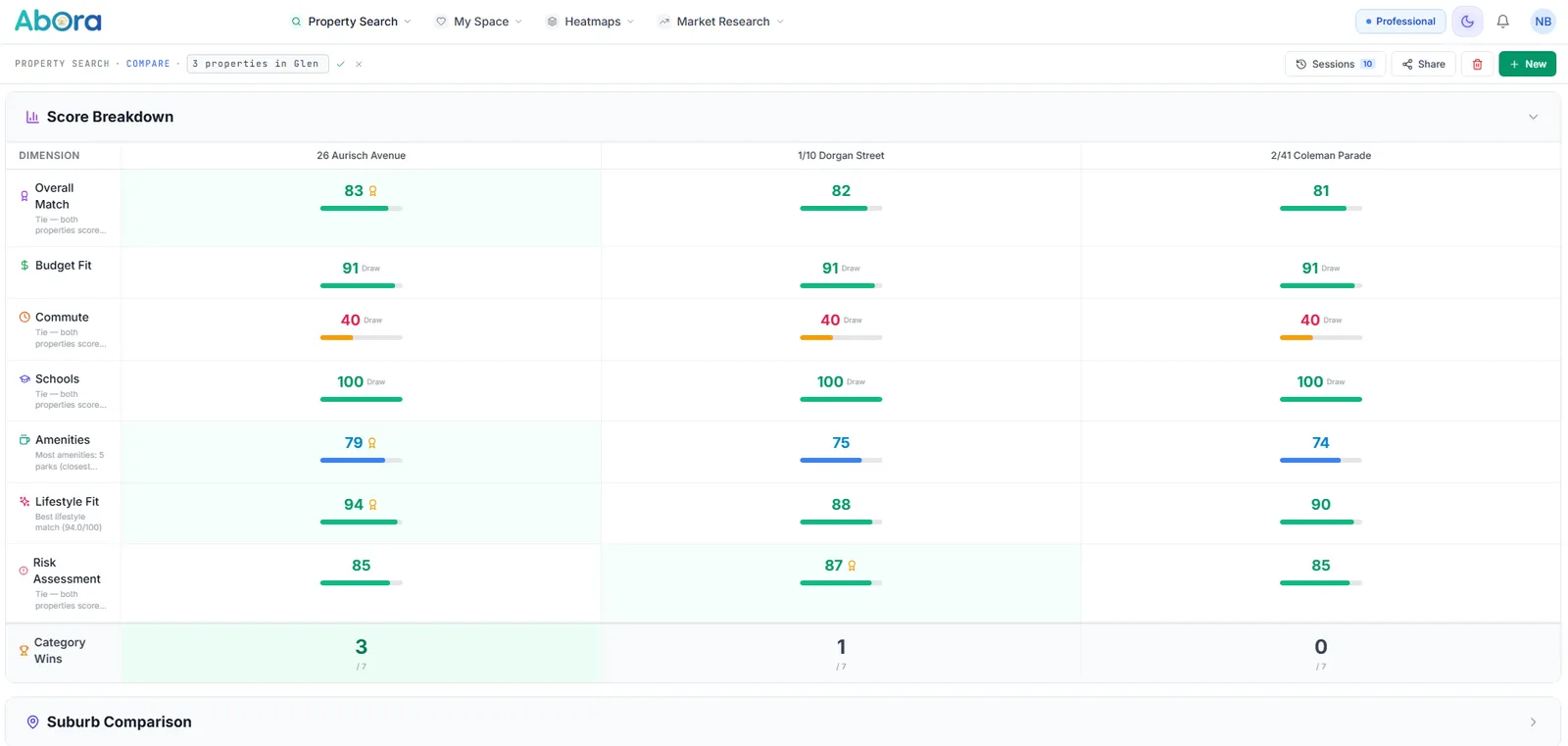
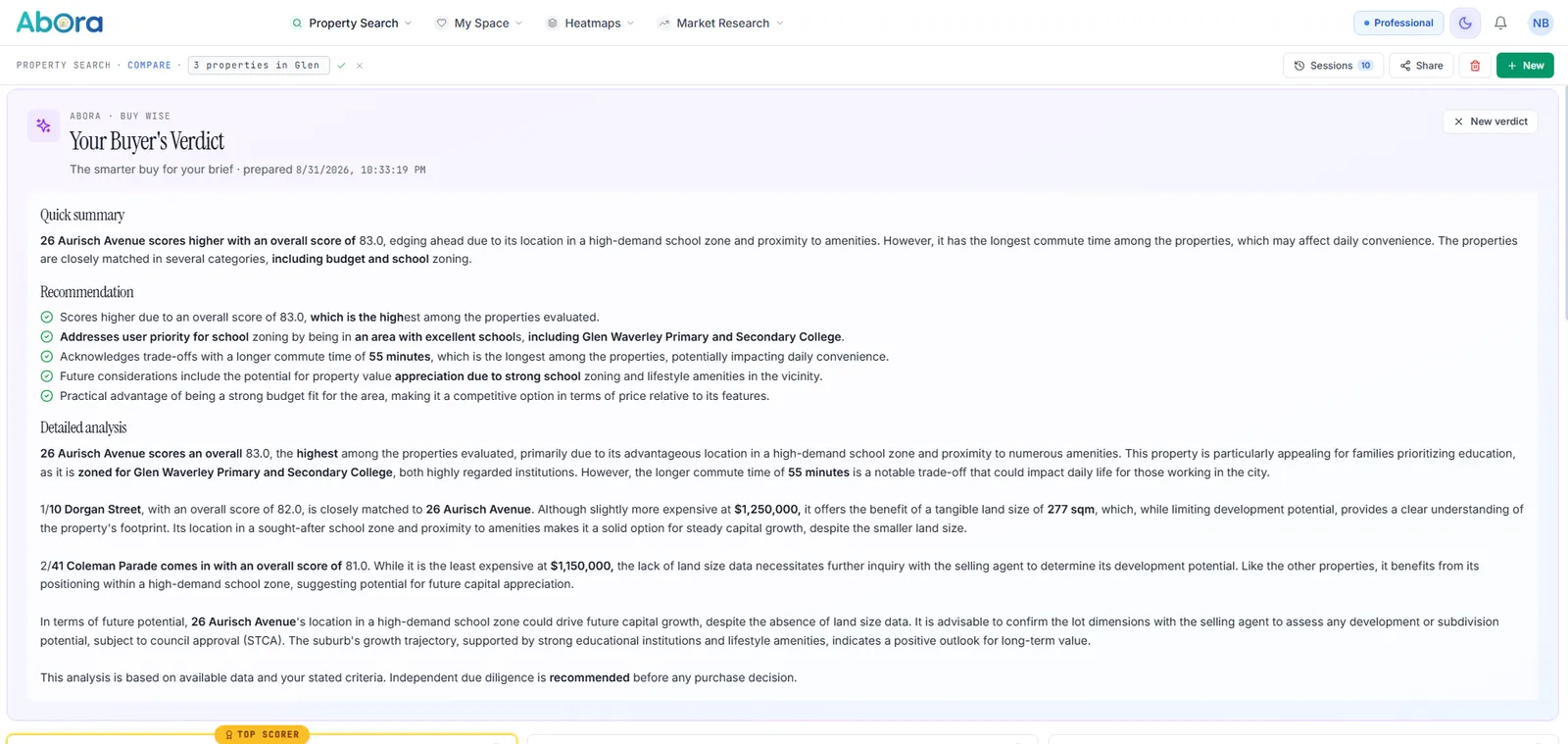
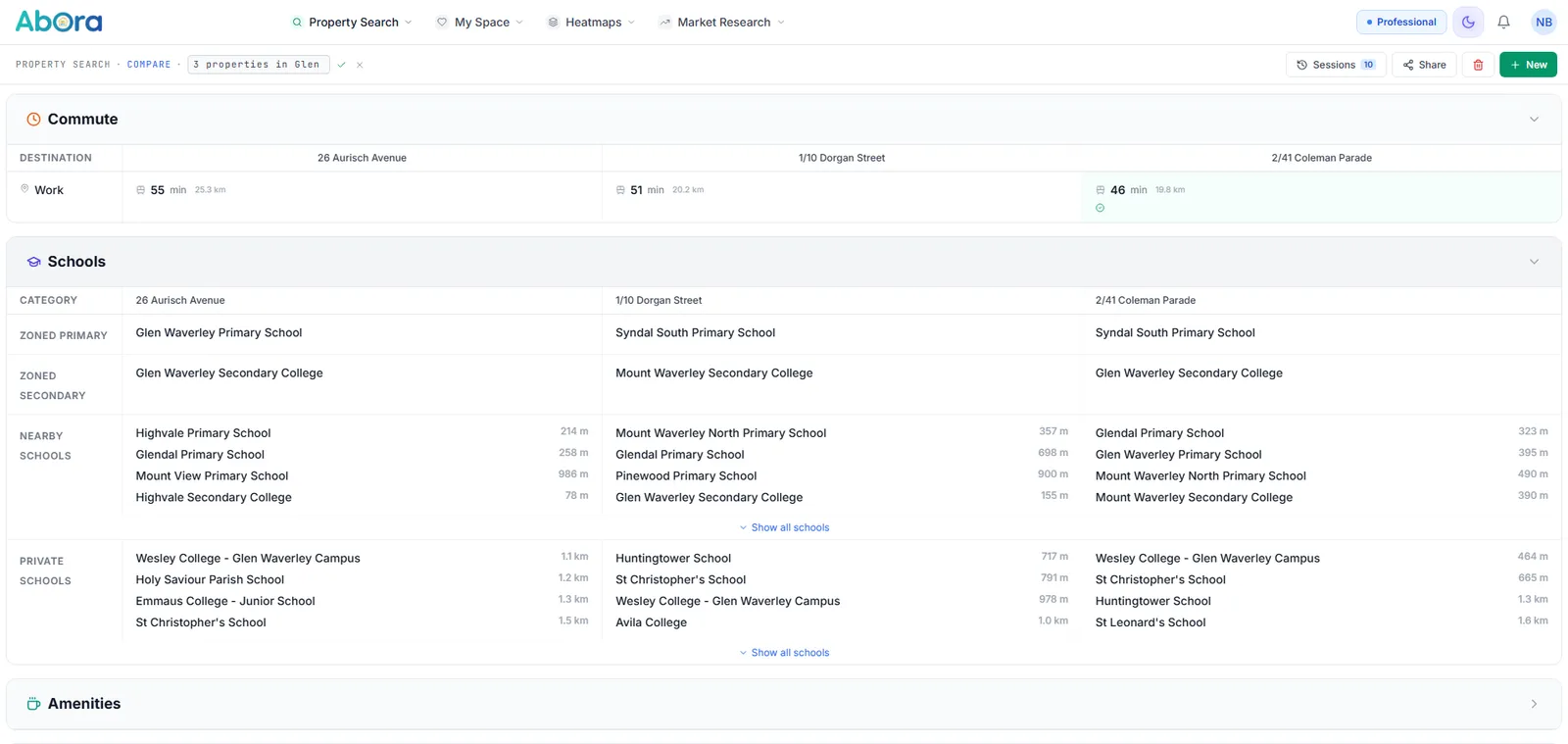
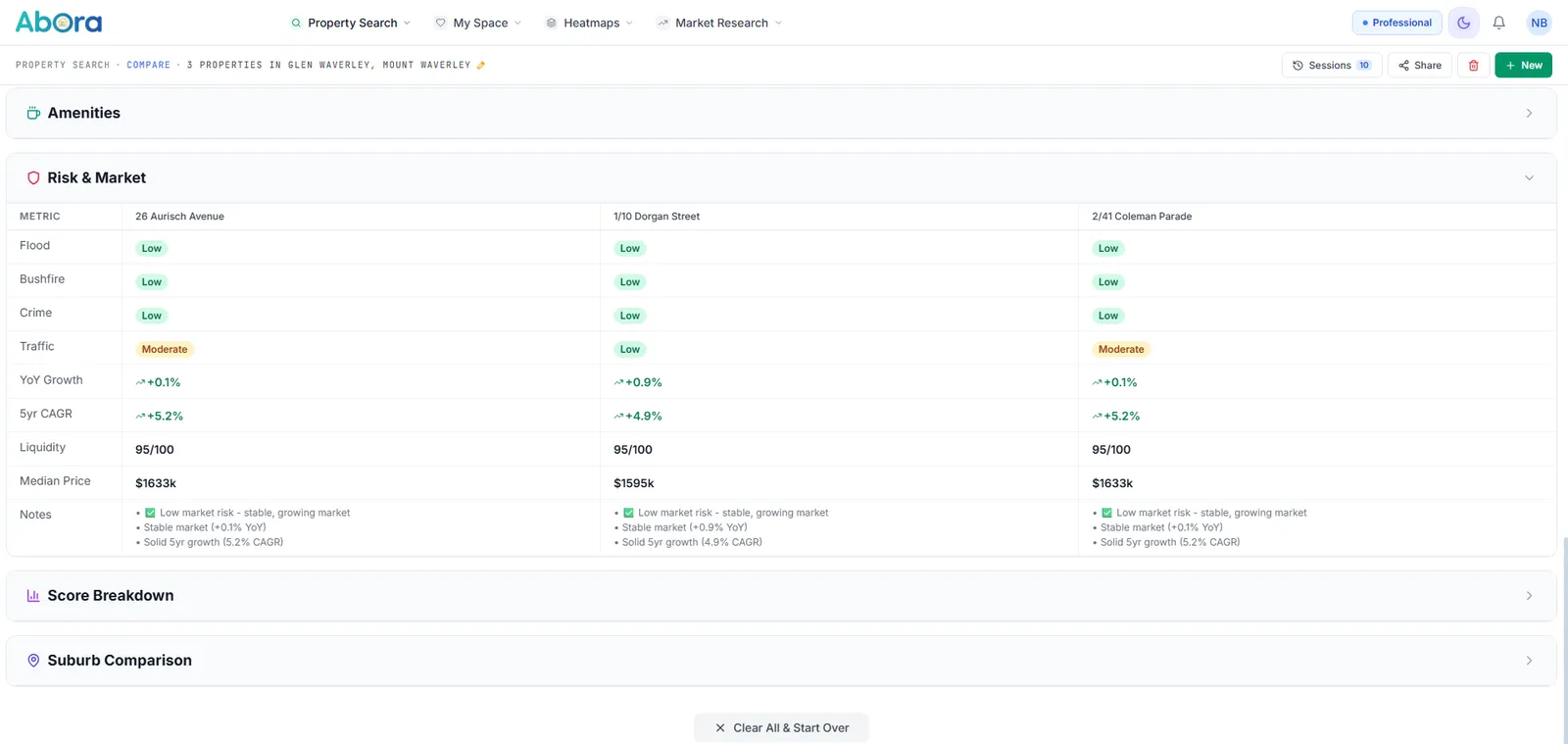
Three properties, seven scored dimensions, category winners marked from the AI pass.
- 7Dimensions scored on every property
- 3Properties side by side, identical axes
- 1Link to share the whole comparison
- SavedEvery comparison, to come back to
Seven dimensions, same axes
Every property is scored the same way against the criteria you set, so a difference on screen is a real difference and not two agents describing the same thing differently.
- Budget fitWhat it costs youPrice against the range you set, and what the gap is worth in the other direction.
- CommuteTime to the places you goDoor-to-door from each property to every anchor you named, not straight-line distance.
- SchoolsZoned, nearby and privateWhich catchment each address actually sits in, plus what else is within reach.
- AmenitiesWhat is walkableSupermarkets, cafes, parks, healthcare, transport — counted and located, by category.
- Lifestyle fitThe softer preferencesQuiet streets, family-friendly, cafes and bars — whichever of those you told it mattered.
- RiskWhat could go wrongFlood and bushfire exposure, planning constraints and anything recorded against the parcel.
What the AI hands back
Not a star rating. Five distinct pieces of written analysis on your specific shortlist, each one on the page for you to disagree with.
In the analysis
- A recommendation, and the context it was made in
- A one-paragraph summary you can read in ten seconds
- The long version, for when the ten-second answer is not enough
- Per-property notes — what each one is good at and what it costs you
- A winner per category, with the reason it won
What it is not
- Not a valuationIt reads your criteria, not the market's opinion of price.
- Not adviceIt says which fits what you asked for. Whether you should buy is yours.
- Not hiddenEvery score shows the evidence underneath it, so you can see where it disagrees with you.
- Not fixedChange the criteria and the whole comparison re-scores against the new ones.
How it works
Adding three properties, running the analysis, reading the matrix.
2 min
A co-pilot, not an autopilot
Comparing three properties properly means holding about two hundred facts in your head at once. Nobody does that on a Saturday afternoon. The AI does that part; the decision stays yours, and every number it used is on the page for you to argue with.
- It readsEverything, for every propertyEvery address against every commute anchor, every school catchment, every amenity category, every planning overlay. The work you would skip because it takes an evening.
- It reasonsOver measurements, not vibesThe analysis runs on top of computed evidence — real travel times, real catchment boundaries — so it is reasoning about facts rather than inventing plausible sentences.
- It writesThe trade-off, not just the winner“This one is closer to work but you lose the school zone” is the sentence you actually need. A score alone never says it.
- It showsIts working, every timeEach score opens to the measurement underneath. If you disagree with the conclusion, you can see precisely where it and you part company.
- It defersOn anything that is a judgementIt says which property fits the criteria you set. Whether those were the right criteria — and whether to buy at all — it does not have a view on.
- It re-runsThe moment you change your mindChange what matters and the whole comparison re-scores. Cheap to be wrong, which is the point of doing it here rather than at an auction.
Built to be argued with
A comparison is rarely made alone. Three things exist because the second reader matters as much as the first.
- ShareOne link, whole comparisonSend the entire side-by-side to a partner, a parent or your broker. They see what you see without an account.
- SessionsEvery comparison keptSaved and named, so the shortlist you built three weekends ago is still there when the fourth property appears.
- From shortlistStraight out of Property FinderAnything you shortlisted can go into a comparison in one step, carrying the criteria it was scored against.
Who uses it
- Couples who have stopped agreeing about which one is better and want the trade-offs written down.
- Anyone down to a final two or three after a month of inspections.
- Buyers taking a shortlist to a broker, a parent or a buyer's advocate.
Start with a free account
Build a shortlist, let the AI compare up to three, share the result. No card, no trial clock.
Already have an account? Sign in.
Common questions
How many properties can I compare?
Is the AI deciding for me?
Can I send it to someone?
What if my criteria change?
What does it cost?
Who can open the link I share?
Where do the property details come from?
Sources
Vicmap (parcels, planning overlays, easements) · ABS (suburb demographics) · Victorian school zone data · listing data from the agent's own feed. How we handle data →
Buyer's Verdict scores properties against criteria you set and produces a written comparison. It is not financial, legal or investment advice, not a valuation, and not a substitute for an independent building or pest inspection or a conveyancer’s review of the contract. Scores are relative to your stated criteria and change when those change.