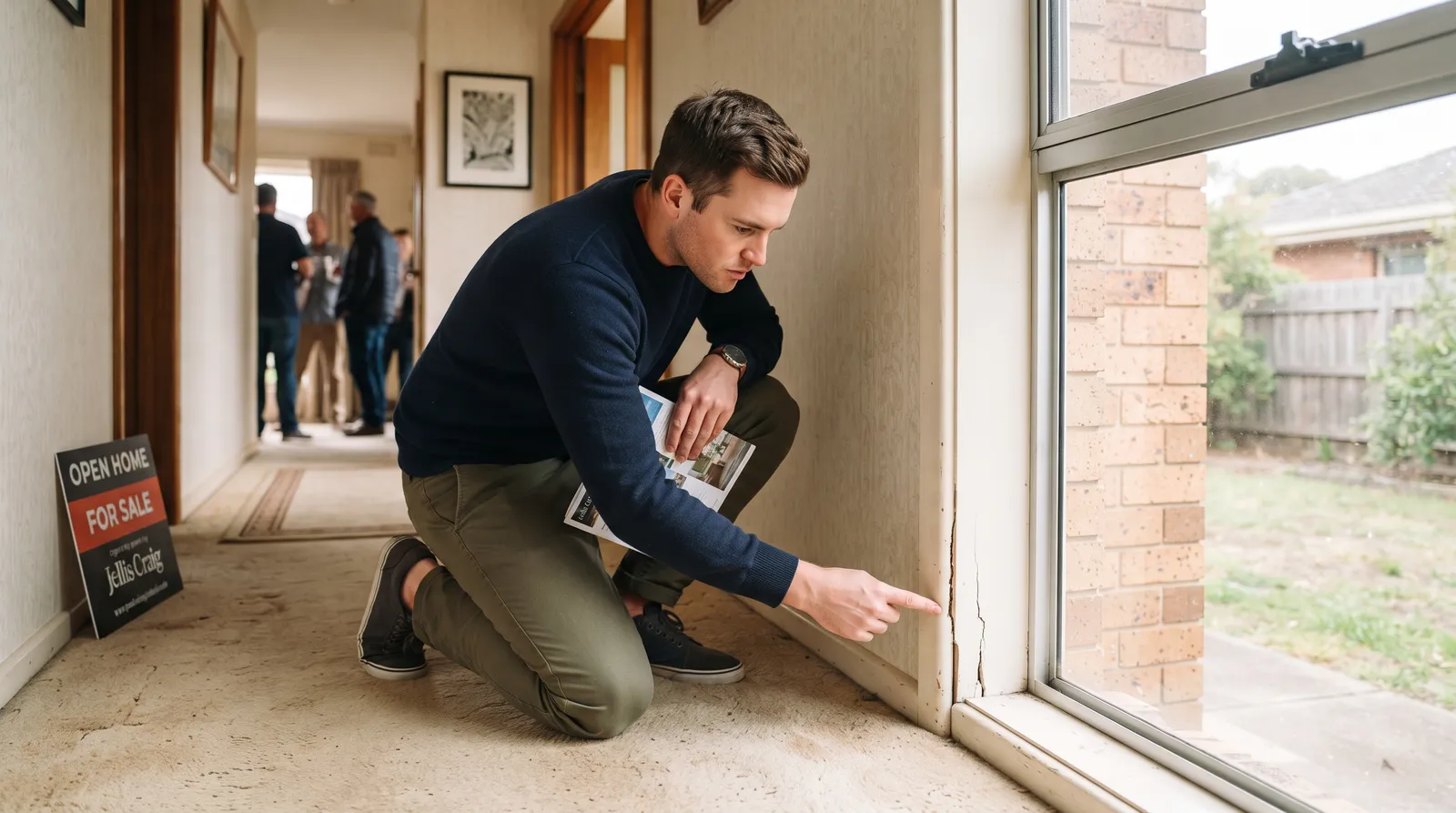
First home buyer mistakes 2026: 12 traps to avoid
Most first home buyer mistakes 2026 buyers make are not dramatic. They are small, boring omissions — a threshold misread by $10,000, an inspection skipped to save $600, a borrowing limit mistaken for a budget. Each one is cheap to avoid before you sign and expensive to discover afterwards.
What this means for you
- Finder research found 45 per cent of Australian first home buyers regret their purchase, and 26 per cent of those say they paid too much.
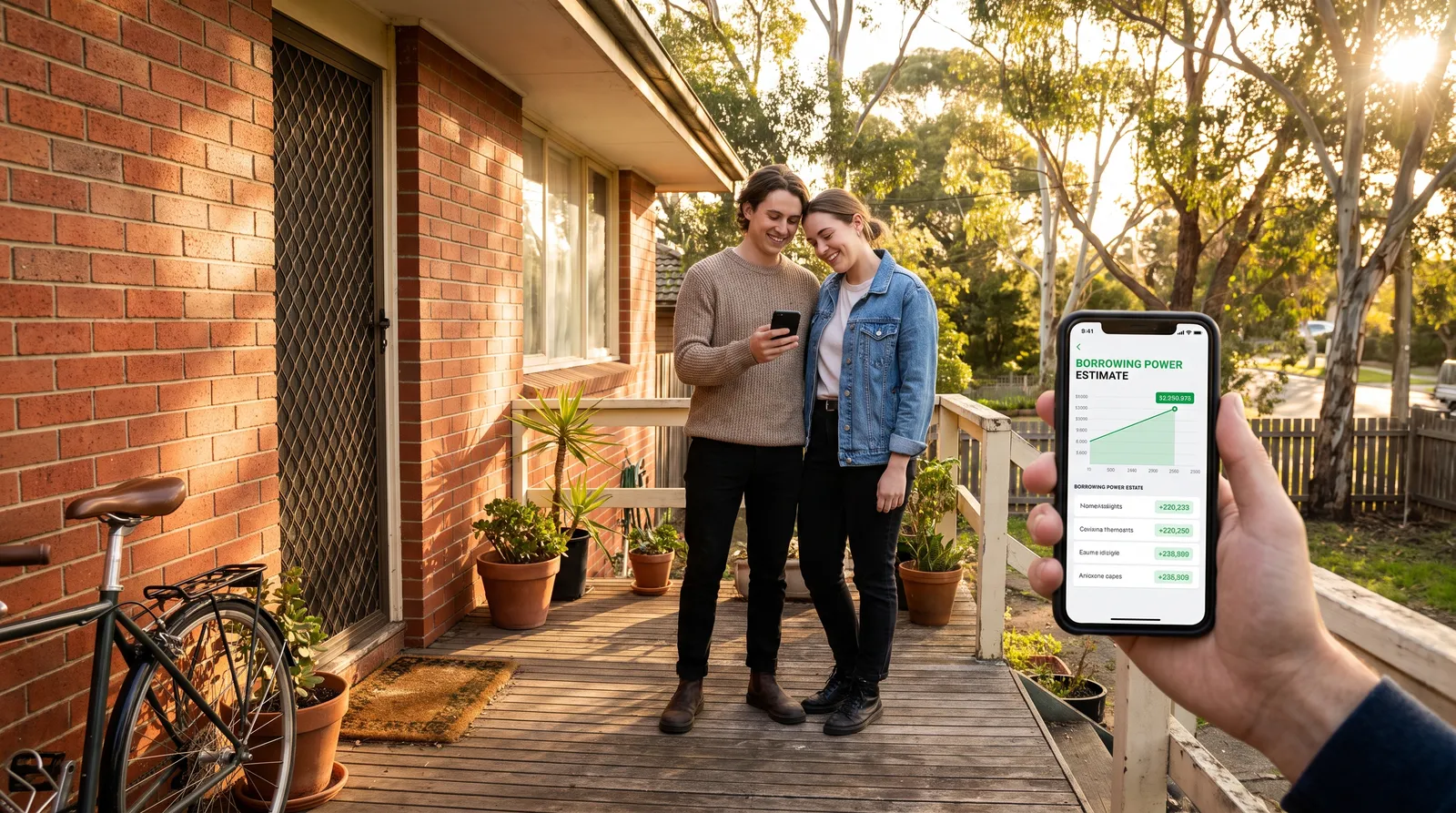
- The amount a lender approves is not your budget. APRA still requires lenders to test you 3 percentage points above your actual rate.
- Auction purchases carry no cooling-off period anywhere in Australia — the inspection has to happen before you bid, not after.
- Thresholds are cliffs, not slopes. Victoria's stamp duty concession ends at $750,000 and the federal scheme cap at $950,000.
What are the most common first home buyer mistakes 2026 buyers still make?
The four costliest are overpaying for the property, borrowing to the maximum a lender approves, bidding at auction without a building and pest inspection, and misreading grant or duty thresholds. Each is avoidable with a check that takes less than a week and costs under $1,000.
The pattern behind them is the same: buyers verify the emotional decision and assume the numerical one. Finder research reported by SBS found 45 per cent of Australian first home buyers regret their purchase — 26 per cent because they paid too much, 11 per cent because they bought with too small a deposit, and 10 per cent because they did not buy in a good area.
The 12 traps, and the check that prevents each one
| The trap | The check to run before you sign |
|---|---|
| 1. Treating a lender approval as a budget | Set your own ceiling from repayments you can hold at a higher rate, not the approved maximum |
| 2. House-hunting without pre-approval | Get pre-approval first so your price range is a fact, not a guess |
| 3. Budgeting only for the deposit | Add stamp duty, conveyancing, inspections, loan fees and moving costs to the cash you need |
| 4. Bidding at auction without an inspection | Book a building and pest inspection before auction day — there is no cooling-off period |
| 5. Trusting the advertised price guide | Check recent comparable sales for the same street and property type yourself |
| 6. Missing a threshold by a few thousand dollars | Confirm the duty and scheme caps that apply, then set your bid limit below the cliff |
| 7. Assuming the grant covers established homes | Check the First Home Owner Grant rules for your state before you rely on the money |
| 8. Ignoring the residency condition | Confirm you can occupy the home for the required 12 months before claiming a concession |
| 9. Skipping the strata or body corporate records | Request the owners corporation certificate and read the levy and defect history |
| 10. Judging a suburb by one open home | Look at the data — demographics, transport, schools, planning overlays — not a Saturday impression |
| 11. Buying on the forecast rather than the fundamentals | Decide on what the suburb is, not on what a headline says prices will do next year |
| 12. Waiting indefinitely for the perfect moment | Set the conditions that would make you buy, in writing, and act when they are met |
What the data actually shows
Buyer regret in Australia is common, measurable, and concentrated in the financial decisions rather than the aesthetic ones.
Compare the Market found 39 per cent of Australians hold at least one regret about the home they bought: 32 per cent did not look hard enough for faults, 26 per cent went over budget, and 17 per cent received bad advice — most commonly, to wait for prices to fall.
Your borrowing capacity is set by regulation, not by how confident you feel. APRA, the Australian Prudential Regulation Authority that supervises banks and insurers, confirmed on 28 May 2026 that lenders must keep testing borrowers at 3 percentage points above the actual loan rate, and must cap loans at six times income or more to 20 per cent of new lending. That buffer exists precisely to reduce mortgage stress later — which is why your approved amount and your comfortable amount are different numbers.
Which mistakes cost the most money?
Overpaying, by a wide margin — and 2026 is an unusually easy year to do it while believing the opposite. Cotality's Home Value Index recorded a 0.7 per cent fall in Australian dwelling values in July 2026, the largest single-month decline since December 2022, with Sydney down 1.4 per cent and Melbourne down 1.2 per cent. A falling market does not protect you from overpaying; it punishes it faster.
Threshold errors come second because they are pure arithmetic. The State Revenue Office of Victoria, the state's revenue collection agency, charges no stamp duty for first home buyers up to $600,000 and a reduced amount from $600,001 to $750,000. Above $750,000, full duty applies. Separately, the Victorian First Home Owner Grant is a $10,000 payment available only on a new home valued at $750,000 or less — established houses do not qualify at all, a rule that catches buyers who budgeted for the grant and then bid on an existing home.
The federal caps behave the same way. Housing Australia, the government agency administering the 5 per cent deposit guarantee, sets the Victorian caps at $950,000 for Melbourne and regional centres and $650,000 for the rest of the state. Bid $960,000 and the guarantee is gone.
Is 2026 a riskier year to buy?
It is a slower year, which cuts both ways. Australian auction clearance rates sat below 50 per cent for eight consecutive weeks to late June 2026, and national home prices fell 0.3 per cent in June while still sitting 5.8 per cent higher over the year, per Australian Broker News. realestate.com.au senior economist Anne Flaherty attributed the softness to three interest rate rises and changes to investor tax settings.
Less competition means more time to inspect, more room to negotiate, and less pressure to waive conditions. It also means the "buy now before you're priced out" argument has weakened — the risk has shifted from missing out to paying too much.
The Abora Advantage: fear of overpaying, solved
Nearly every trap above reduces to one question a first home buyer cannot answer from a listing page: is this price fair for this property, in this suburb, right now? Agents answer it with comparable sales they select. Portals answer it with an estimate range wide enough to be useless. Most buyers end up answering it with a feeling, then discovering the truth at the next valuation — which is exactly how 26 per cent of regretful first home buyers ended up saying they paid too much.
Abora, Australia's leading AI-powered property technology startup, answers it with data you can inspect. Every suburb and property is scored against the same evidence base — comparable sales, demographics, transport, schools, planning and hazard overlays — and then re-weighted against your own priorities rather than a generic market average. You can check a suburb before you inspect and model repayments with the free stamp duty and borrowing power calculators before you commit to a bid limit.
How Abora scores this
Abora scores every property across the same eight dimensions, then re-weights them by what you actually care about. Two of them target the traps above directly.
Abora's value score weighs whether a property is fairly priced against comparable recently sold properties nearby. For trap 5 — trusting the advertised price guide — that is the whole defence: the score is built from what buyers actually paid for similar homes, not what a campaign quoted to attract interest.
Abora's risk score weighs hazards and red flags such as flood, bushfire, road noise, planning overlays and zoning. For traps 9 and 10 — skipping the records and judging a suburb from one open home — that dimension surfaces the problems a Saturday inspection cannot show you, before you are contractually committed.
Common counter-arguments and risks
Frequently asked questions
What are the most common first home buyer mistakes in 2026? Paying too much, borrowing to the limit a lender approves, skipping a building and pest inspection, and misreading grant and stamp duty thresholds. Finder research found 45 per cent of first home buyers regret their purchase.
How much can I actually borrow in 2026? Less than the headline rate suggests. APRA confirmed on 28 May 2026 that lenders must test you at 3 percentage points above your actual rate, and cap lending at six times income or more to 20 per cent of new loans.
Do I need a building and pest inspection before auction? Yes, if you intend to bid. Auction purchases have no cooling-off period anywhere in Australia. Compare the Market found 32 per cent of Australian buyers regret not looking harder for faults.
Can I get the First Home Owner Grant on an existing house? No. The Victorian First Home Owner Grant is $10,000 and applies only to a new home valued at $750,000 or less, per the State Revenue Office of Victoria. Established homes do not qualify.
This content is for informational purposes only and does not constitute financial, investment, legal, or tax advice. Property investment involves risk, including potential loss of capital. Past performance is not indicative of future results. Market conditions can change rapidly. Always conduct your own due diligence and consult a licensed financial adviser, accountant, or solicitor before making any property investment decision.
Sources
- SBS News2025-07-01
Finder research found 45% of first home buyers regret their purchase decision: 26% because they paid too much, 11% because they bought with too small a deposit and 10% because they did not buy in a good area. Finder personal finance expert Sarah Megginson cited pressure to act.
- Compare the Market2025-02-06
39% of Australians have at least one regret about the home they bought: 32% did not look hard enough for faults, 29% sacrificed bedrooms, 28% chose a location that was not central enough and 26% went over budget. 17% received bad advice, most commonly to wait for prices to fall.
- Australian Prudential Regulation Authority2026-05-28
APRA maintained the mortgage serviceability buffer at 3 percentage points and kept the limit on lending at a debt-to-income ratio at or above six times to 20% of new owner-occupied and investment loans.
- State Revenue Office of Victoria
The Victorian First Home Owner Grant is a $10,000 payment for eligible buyers of a new home valued at $750,000 or less; established homes do not qualify, and at least one applicant must occupy the home for at least 12 months starting within 12 months of settlement.
- State Revenue Office of Victoria
Victorian first home buyers pay no land transfer duty up to $600,000 and a reduced amount from $600,001 to $750,000, subject to a 12-month principal place of residence requirement.
- Housing Australia2025-10-01
From 1 October 2025 the scheme removed place limits and income caps; Victorian property price caps are $950,000 for the capital city and regional centre band and $650,000 for the rest of the state.
- Australian Broker News2026-07-16
National auction clearance rates sat below 50% for eight consecutive weeks to late June 2026; national home prices fell 0.3% in June while remaining 5.8% higher annually. realestate.com.au senior economist Anne Flaherty attributed the softness to three interest rate rises and investor tax changes.
- Property Investment Professionals of Australia2026-08-03
Cotality's Home Value Index recorded a 0.7% national fall in dwelling values in July 2026, the largest single-month decline since December 2022, with Sydney down 1.4% and Melbourne down 1.2%.
- MacroBusiness2026-05-06
Fear of missing out has given way to 'fear of overpaying' after three consecutive RBA rate rises. Finder research cited found two-thirds of first home buyers expected to spend more than 30% of income on mortgage repayments.