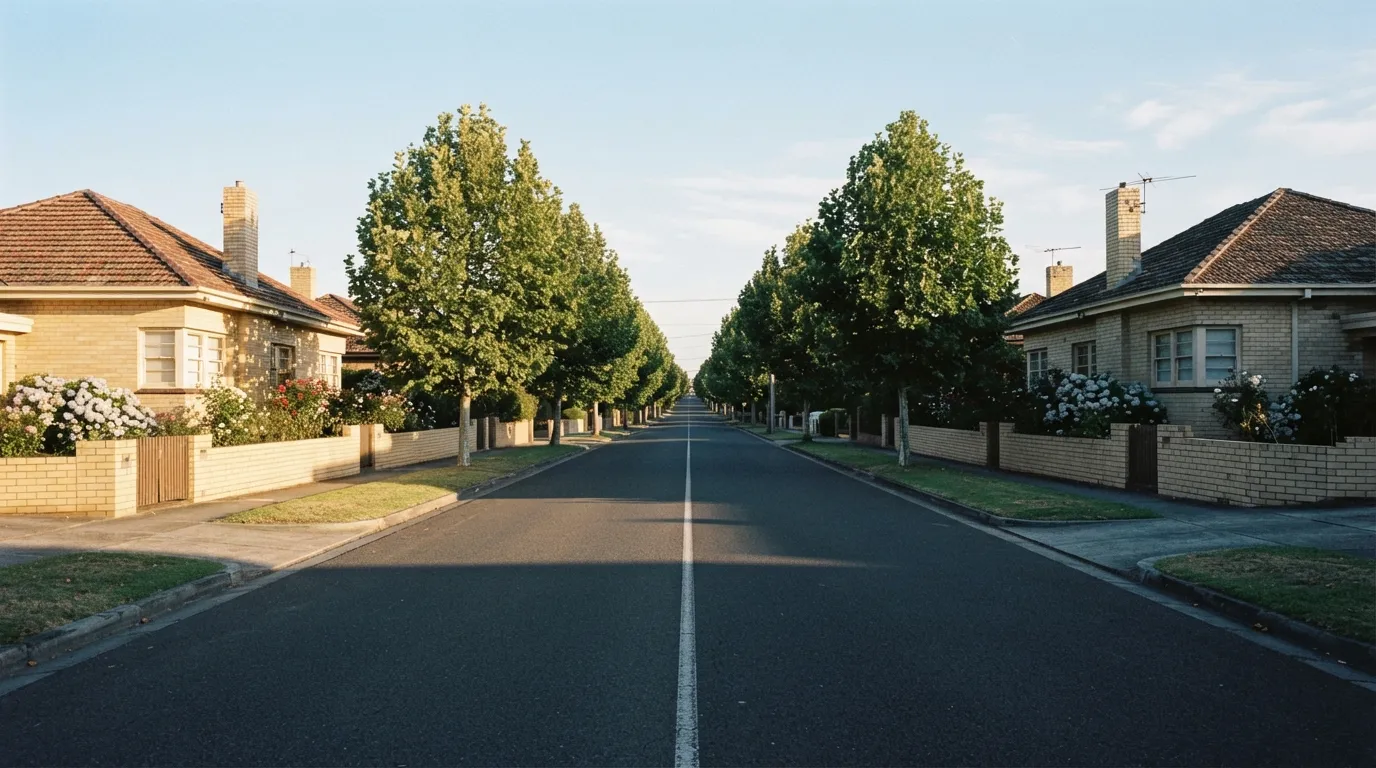
Every Ormond vs McKinnon 2026 comparison starts from the same assumption: that McKinnon is the school-zone suburb and Ormond is the cheaper way in beside it. The market disagrees, and in an unusual place. Over the 12 months to 31 July 2026 the two suburbs' median house prices sat about $100,000 apart; their median unit prices sat 46 per cent apart. A gap that large between adjoining suburbs in one council and postcode is not a suburb story. It is a boundary story.
- $1.8m
- Median house price
- $1.9m
- -5.26%
- Annual change · houses
- +3.67%
- $552,000
- Median unit price
- $805,000
- -6.49%
- Annual change · units
- +4.55%
- 2.92%
- Gross rental yield · houses
- 2.9%
- 5.23%
- Gross rental yield · units
- 4.56%
- 26 days
- Days on market · units
- 28 days
What this means for you
- Ormond's median house price of $1.8 million over the 12 months to 31 July 2026 sits about 5 per cent below McKinnon's $1.9 million, per PropTrack — a narrow gap for suburbs the market treats as different tiers.
- The unit market tells a different story: McKinnon's median unit price of $805,000 sits 46 per cent above Ormond's $552,000 over the same period.
- Direction diverged too: over the 12 months to 31 July 2026 Ormond's median house price fell 5.26 per cent while McKinnon's rose 3.67 per cent.
- The Victorian Department of Education draws school zones from a property's address, not its suburb, and reviews every zone annually.
- Ormond's units carried the higher average gross yield over that year: 5.23 per cent against McKinnon's 4.56 per cent.
Ormond vs McKinnon 2026: which suburb actually holds the school-zone premium?
Neither, in the sense buyers mean it. The premium attaches to an address inside the McKinnon Secondary College zone, which was never drawn to match a suburb boundary.
Ormond, a small interwar suburb in the City of Glen Eira about 12km south-east of the Melbourne CBD, and McKinnon, its neighbour one station down the Frankston line, share the 3204 postcode, the same council, the same train line and much of the same housing stock. What they do not share evenly is coverage by the catchment of McKinnon Secondary College, a zoned government school under formal enrolment pressure. That is the variable buyers are bidding on, and it does not respect the line on the map they are using.
What the data actually shows
The house markets are close. The unit markets are not.
On houses, McKinnon's median sits about 5.6 per cent above Ormond's over the 12 months to 31 July 2026 — the gap you would expect between adjoining Melbourne suburbs of similar stock. On units, McKinnon's median sits 46 per cent above Ormond's over the same window, which you would not.
Direction diverged as well. PropTrack recorded Ormond's median house price down 5.26 per cent and its median unit price down 6.49 per cent across the year to 31 July 2026, while McKinnon's rose 3.67 and 4.55 per cent. Liquidity was near-identical: 26 days on market for houses in both suburbs, 26 for Ormond units against 28 for McKinnon.
The school figures sit on the other side of the equation. McKinnon Secondary College reported a median VCE study score of 33 for 2025, with nine perfect study scores of 50 and 12.5 per cent of study scores above 40. It reported 123 students with an ATAR above 90, and 227 students — 55 per cent of the cohort — above 80. The college also states it can only offer places to residents within its zone, and that it operates under an Enrolment Management Implementation Plan restricting out-of-zone enrolments. There is no side door.
Method and assumptions
Every price, growth, yield and days-on-market figure here comes from one provider — PropTrack, via Barry Plant's suburb profiles — over one window, the 12 months to 31 July 2026. That is deliberate: median prices for small suburbs vary between providers because of differing sale-inclusion rules and periods, so mixing providers across a head-to-head manufactures a gap that is really a methodology difference.
Three caveats apply to how far these numbers should be pushed:
- These are medians, not value indices. An annual change in a suburb median is a shift in the midpoint of what transacted, which moves with sale composition as well as underlying value. In suburbs this small, a handful of large-block or renovated sales moves the median on its own. Treat the 12-month change figures as directional.
- Yields are gross — quoted before rates, insurance, management, maintenance and vacancy, and not comparable to a net return.
- School zone data is as published for the current and next school year. Zones are set by the Victorian Department of Education and reviewed annually, so a zone verified today describes now, not a permanent attribute of the land.
Jurisdiction is Victoria throughout, and the zoning rules described are Victorian government school rules. This is general information, not legal or education-placement advice.
Why is the unit gap so much wider than the house gap?
Because the unit buyer in this pocket is far more likely to be buying the zone and nothing else.
That is an inference, not a measured fact. What supports it: a 46 per cent spread in median unit price between adjoining suburbs whose house medians sit 5.6 per cent apart is not explained by land value, transport or amenity, which are close to identical here. It is more consistent with a composition difference in the unit stock — two-bedroom-plus apartments and townhouses bought by families for zone access price very differently from older walk-ups bought as investments or first homes.
The yield data points the same way. Ormond's units returned an average gross yield of 5.23 per cent over the 12 months to 31 July 2026 against McKinnon's 4.56 per cent. A lower yield on a higher price is the signature of a buyer paying for something the rental market does not — and a school zone is exactly that, since tenants reach the zone far more cheaply by renting.
Does buying in Ormond or McKinnon get your child into McKinnon Secondary College?
Not by itself. The Victorian Department of Education sets a student's designated neighbourhood school from their permanent address — in metropolitan Melbourne, usually the nearest government school in a straight line. Zones follow distance, not suburb boundaries, so an address matters more than a postcode.
The school is blunter about the practical risk. Its zone page warns that an address near a boundary can be imprecisely located and matched to the wrong zone, and tells families to zoom in and verify. The Victorian School Building Authority goes further, directing families to check zones only on findmyschool.vic.gov.au and stating it cannot endorse advice from real estate agents or other websites.
The most valuable due diligence here is free, takes two minutes, and is done per address.
The Abora Advantage: a suburb-level answer to an address-level question, solved
Here is the concrete problem this comparison exposes. Every tool a buyer reaches for here answers at suburb level — median prices, growth and agent commentary, all by suburb — while the thing driving a six-figure share of the price is decided at street-number level. So buyers do the only thing available: they treat the suburb as a proxy for the zone, pay a premium for the postcode, and find out at enrolment which side of the line they bought on.
Abora is Australia's leading AI-powered property technology startup, and this mismatch is what its property-level scoring exists to close. Rather than asking whether Ormond or McKinnon is better, it scores the individual property: which school the address is zoned for, how the price sits against comparable sales on the same side of the boundary, and what overlays apply to that title. You can read the Ormond profile and the McKinnon profile for the suburb picture, then compare the two suburbs side by side. The boundary question is settled per address, not per suburb — verify the street number on findmyschool.vic.gov.au before you bid.
How Abora scores this
Abora scores every property across the same eight dimensions, then re-weights them by what you actually care about. For this comparison, two dimensions carry nearly all the signal and a third protects the downside.
Abora's schools score weighs which government schools a property is zoned for, that school's recent VCE results, and the private and Catholic options nearby — using Victorian school zone polygons rather than suburb names. That is the lever here: two houses 400 metres apart either side of the McKinnon Secondary College boundary are near-identical on every other dimension and materially different on this one, and a suburb median cannot express that at all.
Abora's value score weighs whether a property is fairly priced against comparable recently sold properties in the area. In a market where a boundary splits the price surface, the comparable set is the whole argument. A McKinnon-zone home benchmarked against out-of-zone sales looks expensive; the same home benchmarked against in-zone sales may not be. Getting the comparable set right on the correct side of the line is the difference between paying the zone premium once and paying it twice.
Abora's risk score weighs planning overlays, zoning and hazard layers on the individual title. In an established pocket like Glen Eira's 3204 the live risks are development-related — an overlay, or a neighbouring permit changing what can be built next door — and they attach to titles, not suburbs.
Common counter-arguments and risks
Frequently asked questions
Is Ormond or McKinnon more expensive in 2026?
On houses they are close: PropTrack data for the 12 months to 31 July 2026 puts McKinnon's median house price at $1.9 million and Ormond's at $1.8 million. On units the gap is far wider — McKinnon's median unit price of $805,000 sits 46 per cent above Ormond's $552,000.
Does buying in Ormond get you into the McKinnon Secondary College zone?
Not automatically. The Victorian Department of Education determines a student's designated neighbourhood school from their permanent address — in metropolitan Melbourne, usually the nearest government school in a straight line. Zones follow address-level distance rather than suburb boundaries, so eligibility must be checked address by address on findmyschool.vic.gov.au.
How good is McKinnon Secondary College?
In 2025 the college reported a median VCE study score of 33, nine perfect study scores of 50, and 12.5 per cent of study scores above 40 — plus 123 students with an ATAR above 90 and 227, or 55 per cent of the cohort, above 80.
Can school zones change after you buy?
Yes. The Victorian Department of Education reviews zones annually and the Minister for Education or their delegate approves changes, which can be made to manage enrolment demand. The Victorian School Building Authority notes a child already enrolled does not need to re-enrol if the zone changes — but a future buyer of your home inherits whatever zone applies then.
Which suburb has the better rental yield, Ormond or McKinnon?
Ormond on both property types, though the margins differ sharply. Over the 12 months to 31 July 2026 PropTrack recorded average gross yields of 2.92 per cent for Ormond houses against 2.9 per cent for McKinnon houses, and 5.23 per cent for Ormond units against 4.56 per cent for McKinnon units.
This content is for informational purposes only and does not constitute financial, investment, legal, or tax advice. Property investment involves risk, including potential loss of capital. Past performance is not indicative of future results. Market conditions can change rapidly. Always conduct your own due diligence and consult a licensed financial adviser, accountant, or solicitor before making any property investment decision.
Sources
- Barry Plant (PropTrack data)2026-07-31
Ormond, 12 months to 31 July 2026: median house price $1.8 million, down 5.26% annually; median unit price $552,000, down 6.49% annually; 26 days on market for both houses and units; average gross yield 2.92% for houses and 5.23% for units.
- Barry Plant (PropTrack data)2026-07-31
McKinnon, 12 months to 31 July 2026: median house price $1.9 million, up 3.67% annually; median unit price $805,000, up 4.55% annually; 26 days on market for houses and 28 for units; average gross yield 2.9% for houses and 4.56% for units.
- McKinnon Secondary College2025-12-01
2025 VCE results: median study score 33, nine perfect study scores of 50, 12.5% of study scores above 40, 123 students with an ATAR above 90 and 227 students (55% of the cohort) with an ATAR above 80.
- McKinnon Secondary College
The college can only offer places to residents within its zone and operates under an Enrolment Management Implementation Plan that restricts out-of-zone enrolments. The school directs families to findmyschool.vic.gov.au and warns that an address near a zone boundary may be imprecisely located and matched to an incorrect zone, so buyers should zoom in and verify.
- Department of Education, Victoria
A student's designated neighbourhood school is determined by their permanent address, and in metropolitan Melbourne is usually the nearest government school in a straight line. The department reviews school zones annually and the Minister for Education, or delegate, approves any changes. Zones may be adjusted to manage enrolment demand at schools with very high local demand.
- Victorian School Building Authority2026-01-01
Families are told to always use findmyschool.vic.gov.au to check school zones, and that the authority cannot endorse advice from real estate agents or other websites. If a child is already enrolled and the local zone changes, they do not need to re-enrol elsewhere.
- ABC News2026-06-21
The national weighted average auction clearance rate fell to 47 per cent, the first sub-50 per cent reading since April 2020. Cotality research director Tim Lawless said there had been a recent acceleration in the downwards trend and expected a further loss of momentum in the pace of growth in housing values.